
Zaviira Assure
One system for every hazard in your housing stock.
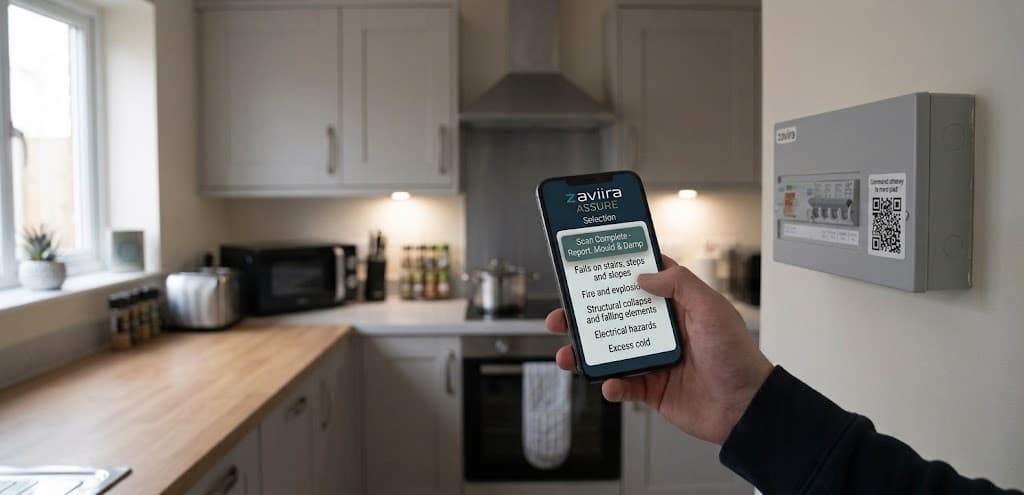
Built for Awaab's Law and the full Housing Health and Safety Rating System, all 21 hazard categories, in one system. For housing associations, HMO operators, and private portfolio landlords managing older housing stock. Not for new builds.
Register interestWhy now
The deadlines are real, and close.
Live since October 2025
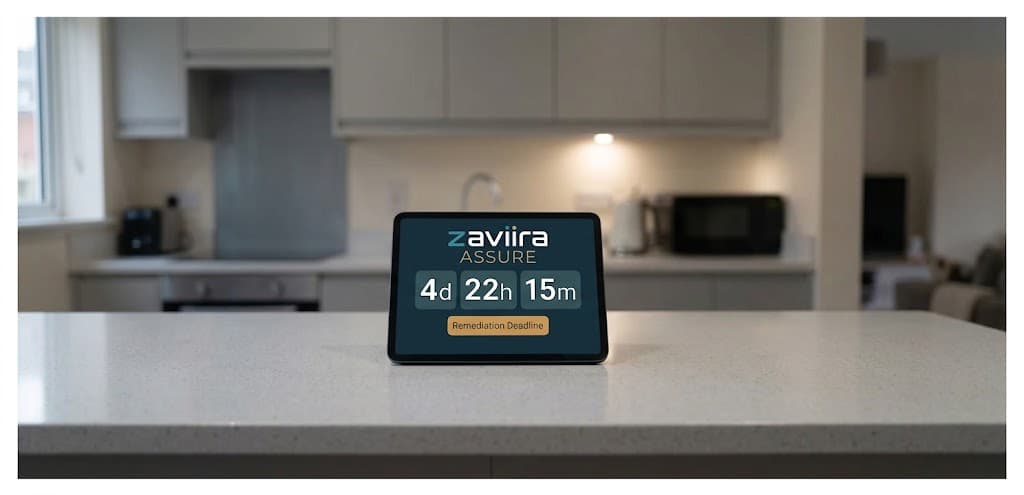
Awaab's Law already requires social landlords to investigate emergency hazards within 24 hours, and damp and mould within 10 working days.
30 November 2026
Phase 2 extends the same statutory clock to falls, fire, electrical, structural, excess cold and heat, and domestic hygiene hazards.
The private sector is next
The government has committed to extending Awaab's Law and a new Decent Homes Standard to private rented housing. Building for it now means being ready before it lands.
All 21 HHSRS hazard categories, and when each one lands
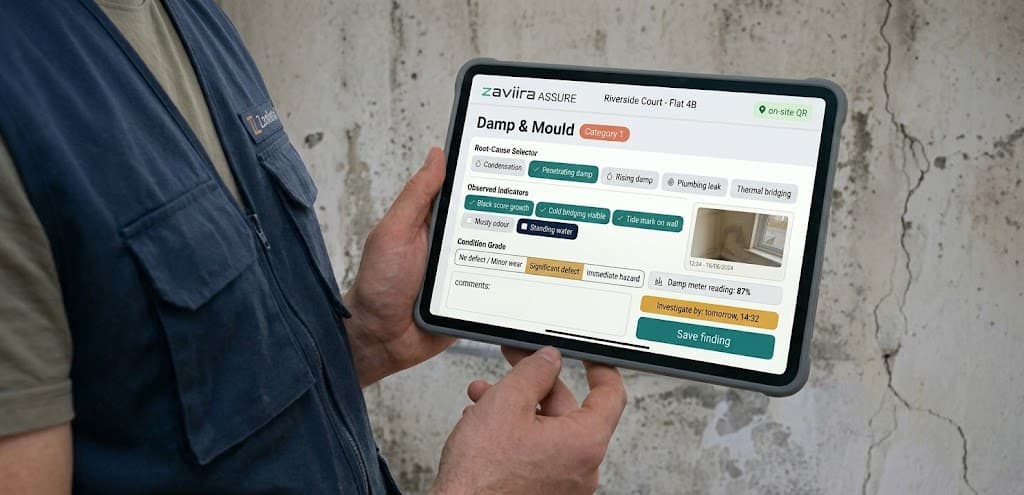
Damp and mould growth
Live nowCondensation, penetrating damp, and mould contamination
Falls on the level
30 Nov 2026Trip and fall hazards from uneven or damaged flooring
Falls on stairs, steps and slopes
30 Nov 2026Missing handrails, damaged steps, poor stair lighting
Falls between levels
30 Nov 2026Balconies, windows, and drops without protection
Fire and explosions
30 Nov 2026Faulty wiring, blocked exits, missing detection
Flames, hot surfaces, etc.
30 Nov 2026Burns and scalds from exposed heat sources
Structural collapse and falling elements
30 Nov 2026Roof, ceiling, or wall failure risk
Electrical hazards
30 Nov 2026Faulty wiring, exposed circuits, old installations
Excess cold
30 Nov 2026Inadequate heating or insulation
Excess heat
30 Nov 2026Overheating risk, particularly top-floor flats
Domestic hygiene
30 Nov 2026Pest infestations and refuse management failures
Collisions, entrapment and ergonomics
RoadmapDesign hazards causing injury during normal use
Radiation
RoadmapRadon gas and other radiation exposure
Lead
RoadmapLead paint and pipework in older properties
Indoor air pollutants
RoadmapPoor ventilation, combustion by-products
Asbestos and manufactured mineral fibres
2027Legacy materials in pre-2000 buildings
Water supply
RoadmapContaminated or inadequate water supply
Crowding and space
RoadmapOvercrowding relative to room and dwelling size
Entry by intruders
RoadmapInadequate security, locks, or access control
Noise
RoadmapExcessive noise transfer between dwellings
Lighting
RoadmapInadequate natural or artificial lighting
Damp and mould growth
Live nowCondensation, penetrating damp, and mould contamination
Falls on the level
30 Nov 2026Trip and fall hazards from uneven or damaged flooring
Falls on stairs, steps and slopes
30 Nov 2026Missing handrails, damaged steps, poor stair lighting
Falls between levels
30 Nov 2026Balconies, windows, and drops without protection
Fire and explosions
30 Nov 2026Faulty wiring, blocked exits, missing detection
Flames, hot surfaces, etc.
30 Nov 2026Burns and scalds from exposed heat sources
Structural collapse and falling elements
30 Nov 2026Roof, ceiling, or wall failure risk
Electrical hazards
30 Nov 2026Faulty wiring, exposed circuits, old installations
Excess cold
30 Nov 2026Inadequate heating or insulation
Excess heat
30 Nov 2026Overheating risk, particularly top-floor flats
Domestic hygiene
30 Nov 2026Pest infestations and refuse management failures
Collisions, entrapment and ergonomics
RoadmapDesign hazards causing injury during normal use
Radiation
RoadmapRadon gas and other radiation exposure
Lead
RoadmapLead paint and pipework in older properties
Indoor air pollutants
RoadmapPoor ventilation, combustion by-products
Asbestos and manufactured mineral fibres
2027Legacy materials in pre-2000 buildings
Water supply
RoadmapContaminated or inadequate water supply
Crowding and space
RoadmapOvercrowding relative to room and dwelling size
Entry by intruders
RoadmapInadequate security, locks, or access control
Noise
RoadmapExcessive noise transfer between dwellings
Lighting
RoadmapInadequate natural or artificial lighting
How it works
Root cause, not just a flag.
Every hazard
All 21 HHSRS categories, not just the five everyone talks about.
We've built the workflow that makes Awaab's Law compliance simple. Every one of the 21 HHSRS categories is already built into the platform, ready when the law is.
Live now, full workflow
Awaab's Law, 30 November 2026
On the roadmap, not yet legally scheduled
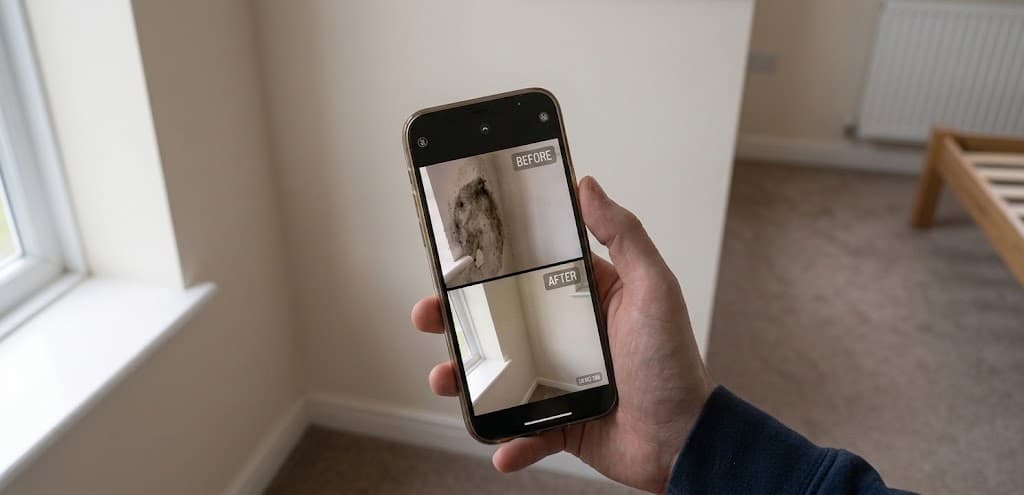
How a report becomes a closed, evidenced case
Ten steps, every one timestamped.
Full audit trail
Every action, every timestamp, every photo is logged in an append-only record that can never be edited or deleted.
Rationale
This is what actually makes the evidence court-ready. A complete, tamper-proof history for every property, generated automatically, not assembled under pressure after a complaint lands.
Register interest
Get ready before the next deadline lands.
Zaviira Assure is in active development. Leave your details and we'll reach out personally as it becomes available.